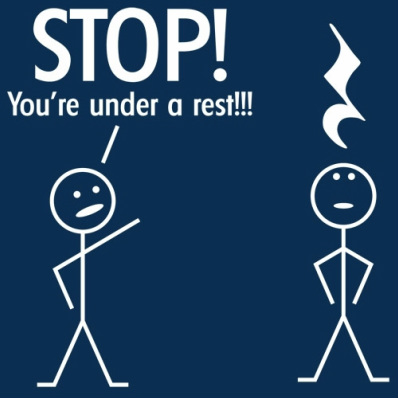
In music, rests are used to fill the gaps in between the notes. They show musicians when they should take breaks, breaths and stop playing. During rests, silence is heard (or the background noise which was previously ignored), while the players wait for their next opportunity to play again. Rests are often integrated into melodies and form important parts of the music that you hear.
Here is the famous example of Eine Kleine Nachtmusik, by Mozart, played by the Slovak Chamber Orchestra:
W.A.Mozart Eine kleine Nachtmusik (Complete) Slovak Chamber Orchestra, posted by HarpsichordM
Here is the sheet music for the main melody of that piece:
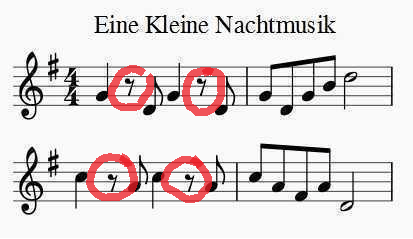
Did you hear the tiny rests at the beginning of this piece? Have you noticed how important the rests are to this tune?
A number of composers have abandoned melody, harmony and rhythm altogether and have created works of art relying upon silence, with only rests written on the sheet music. For example, John Cage created the piece 4’33” consisting only of silence:
4’33” by John Cage – John Cage Live at the Barbican – BBC Four Collections, posted by BBC
In three movements, this piece has only rests notated in it, and any instrument or combination of instruments can “play” it. When listening and watching it, the audience can enjoy the once-forgotten background sounds of chairs squeaking, people coughing, and phones occasionally buzzing.
This has shown how rests represent silence, places to breathe, and form important parts in melodies. Similarly to notes, rests have symbols which represent them on the score. To find more about these, read our next music theory post…
If you have any questions about this post, or if you have any new ideas, please email myblg.music.blog@gmail.com
If you would like to learn more about music and its impact on the world, follow Our Music Blog.
References:
https://en.wikipedia.org/wiki/List_of_silent_musical_compositions
http://151music.weebly.com/uploads/1/8/8/2/18822776/3922252.jpg?1366586310
 Our Music Blog
